ECOS – Éclairer les Circuits de l’Open Science
ÉCOS — Éclairer les Circuits de l’Open Science is a project funded by GIS URFIST. It explores the economic models and systemic dynamics of scholarly publishing in the context of Open Science. By combining data analysis, economic modeling, and interactive visualization, ÉCOS aims to make the mechanisms of scholarly communication more transparent and accessible to a wide audience, including students, librarians, policymakers, and researchers.
The ÉCOS project addresses the ongoing transformations of the scholarly publishing market in the era of Open Science. The transition to Open Access reshapes the relationships between researchers, publishers, universities, libraries, and funding agencies. Yet, the underlying economic models and systemic interactions remain poorly understood.
ÉCOS seeks to fill this gap by:
-
Mapping the key actors and financial flows in scientific publishing.
-
Modeling economic scenarios to anticipate the long-term sustainability of Open Access models.
-
Developing an interactive Shiny dashboard that makes these dynamics visible and understandable.
-
Sharing open-source tools and resources to support training and critical reflection within the Open Science ecosystem.
Through this multi-layered approach, the project contributes to both research and training, while fostering greater transparency in scholarly communication.
Funded by Urfist


-
Abdelghani Maddi — Principal Investigator, GEMASS (Sorbonne University)
-
Francesco De Pretis — Bloomington University – US
-
Ahmed Yaman Abdin — Saarland University – Germany
-
Sara Shahanaghi — Toulouse School of Economics – France; Columbia University – US
21 October 2026 · Paris, France
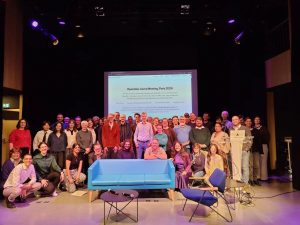
OpenAlex Users Meeting 2026
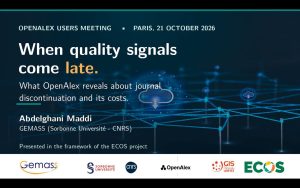
Abdelghani Maddi presented When Quality Signals Come Late: What OpenAlex Reveals About Journal Discontinuation and Its Costs. The talk examined the scientific and financial consequences of delayed journal-quality signals, drawing on Scopus, OpenAlex and APC data.
Event programme
Presentation slides (Zenodo)
  |
26–28 August 2026 · Éveux, France
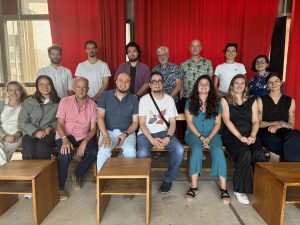
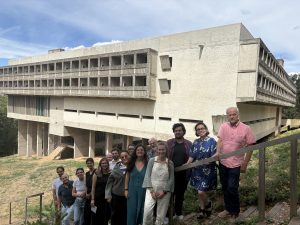
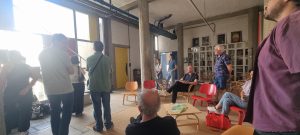
ELICO Summer School: Ambivalences of Open Science
Participation in a three-day summer school at the Couvent de la Tourette. Discussions explored the tensions between the ideals and practices of Open Science, with particular attention to publishing economics, hidden costs, research evaluation, infrastructure governance and the political economy of openness.
 |
 |
 |
2026 · Research Square · Preprint
The Costs of Late Quality Signals in Scholarly Publishing
Abdelghani Maddi (2026).
Drawing on 722 journals discontinued by Scopus for quality concerns and 1.13 million publications indexed in OpenAlex, this study examines the scientific and financial exposure
associated with delayed quality signals in scholarly publishing.
Read the preprint
Diamond Open Access: Economic Models
and Institutional Sustainability
In collaboration with the ANR-funded OPENIT project, ongoing qualitative interviews examine the organisation, financing and governance of Diamond Open Access publishing. The research focuses on the conditions that enable these models to operate and remain sustainable, including institutional support, editorial labour and dependence on public funding.
The Political Economy of Open Science: Market Dynamics and Modelling
A second research strand investigates the political economy of Open Science and the transformation of scholarly publishing markets. Combining economic analysis, game-theoretic modelling and scenario simulations, this work examines the strategic interactions between publishers, research institutions, funders and scholarly communities. It explores the economic conditions and trade-offs associated with alternative Open Access publishing models.